

Buying PDR cold glue: which glue is the right one?
There is no single best PDR cold glue – what matters is that the glue matches the temperature you work at. A cold glue used at the wrong temperature becomes too hard or too soft and pulls poorly. This is what to look for when buying.
In short
- The key criterion is your working temperature – not the brand.
- Makmayer Summer: from 17 °C. Makmayer Winter: 0–18 °C.
- Good cold glue pulls without waiting time and usually releases without residue.
- One 8 g tin lasts at least 1–2 years of active use.
- For all year round: Summer and Winter as a set.
What is PDR cold glue?
PDR cold glue is a tacky compound for paintless dent repair. It is applied thinly to a cold glue tab; the tab is placed on the dent and pulled with a slide hammer. Unlike hot glue, cold glue does not need to be melted and does not need to set – place it and pull right away.
The 5 buying criteria
| Criterion | What to check | Makmayer cold glue |
|---|---|---|
| Temperature range | Does the glue match the temperature in your workshop? | Summer from 17 °C, Winter 0–18 °C |
| Waiting time | Can you pull right after placing the tab? | yes – no waiting time |
| Residue | Does the glue release cleanly from the paint? | usually residue-free; remove any residue with 99% isopropyl alcohol |
| Yield and shelf life | How long does a tin last, does it expire? | 8 g lasts at least 1–2 years; no expiry date if the tin is kept closed |
| Tabs | Are matching tabs available, do they fit your slide hammer? | aluminium tabs in five sizes, universal – fit practically any slide hammer |
Why temperature decides
Cold glue is formulated for a temperature range. Outside of it, performance drops significantly:
- Summer glue in the cold becomes too hard – it adheres worse to the panel and does not pull well.
- Winter glue in the warmth becomes too soft, “like chewing gum” – it leaves residue and does not pull.
At 17–18 °C both Makmayer glues work; we then recommend Summer. In practice nobody works with cold glue below 0 °C – the work is done indoors.
| Workshop temperature | Recommendation |
|---|---|
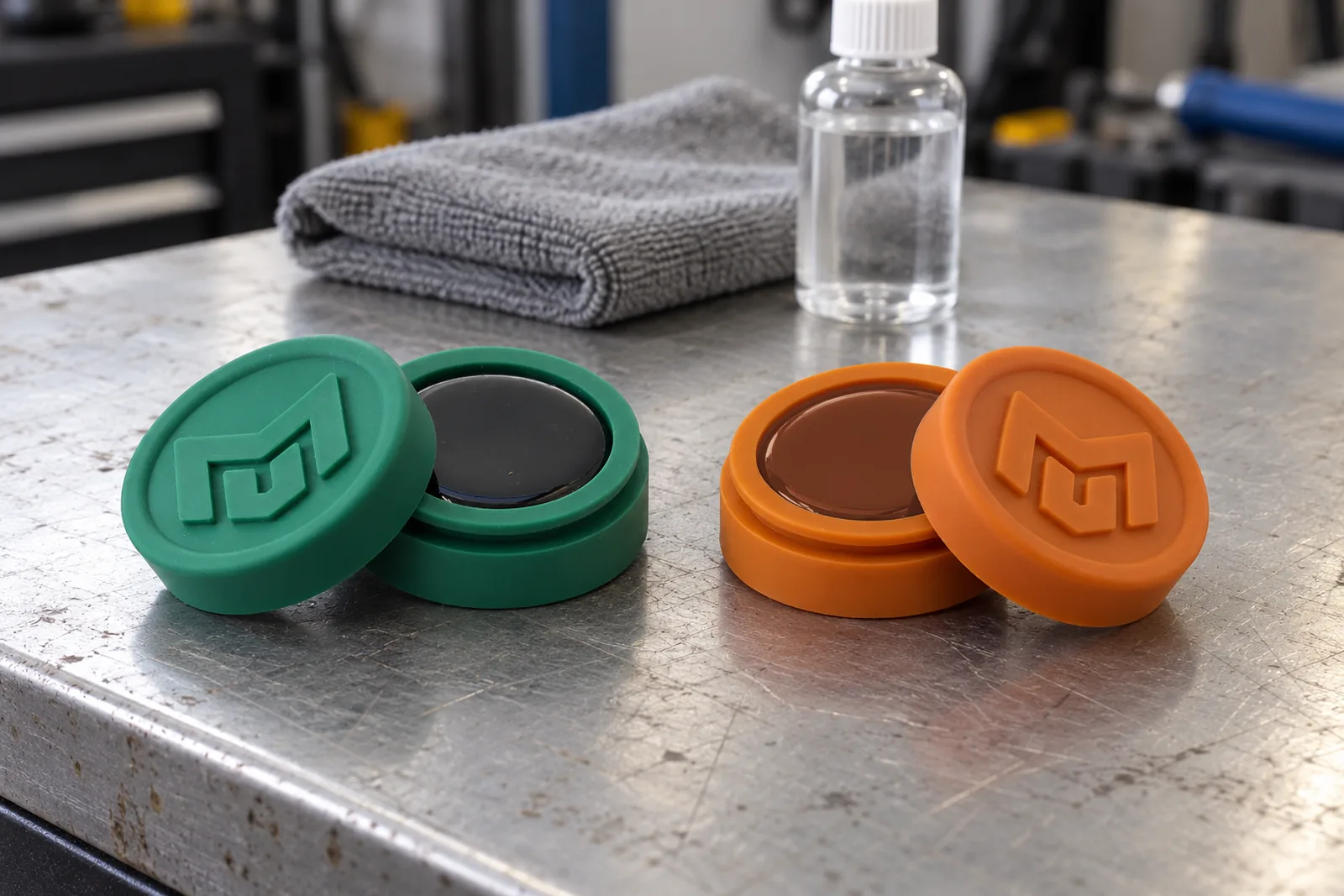
| 0–16 °C | Cold glue Winter (orange tin) |
| 17–18 °C | both possible, preferably Summer |
| from 19 °C | Cold glue Summer (green tin) |
| changing through the year | Summer + Winter set |
How long does a tin last?
Only a very thin layer under 1 mm goes on the tab, and one layer lasts a long time – some technicians work with the same layer for over a month. One 8 g tin lasts at least 1–2 years of active use. For workshops with higher consumption there is the 25 g Big Pack.
Which Makmayer cold glue for whom?
| You work … | Suitable |
|---|---|
| mainly in summer or in a heated workshop | Cold glue Summer (8 g or 25 g Big Pack) |
| in a cool or unheated workshop | Cold glue Winter (8 g or 25 g Big Pack) |
| all year round | Cold glue set Summer + Winter |
| and want to test cold glue first | Cold glue trial set (glue + tab) |
| and are starting from scratch | Cold Glue Complete Set with PitPull V2, Summer and Winter glue, five tabs and case |
Makmayer cold glue is made in Germany. Founder Vladislav Mayer, a PDR technician, won first place in glue pulling at the Dent Olympics (Mobile Tech Expo, Orlando, USA) in 2017.
Further reading
Frequently asked questions
What is the best PDR cold glue?
The one that matches your working temperature. Outside its temperature range a cold glue becomes too hard or too soft and pulls poorly. At Makmayer: Summer from 17 °C, Winter 0–18 °C.
How long does a tin of cold glue last?
An 8 g tin lasts at least 1–2 years of active use, because only a very thin layer is applied. There is no expiry date as long as the tin is kept closed.
Do I need both Summer and Winter glue?
If the temperature in your workshop changes through the year, yes. At 17–18 °C both work; below that Winter, above that Summer is the right choice.
Does Makmayer cold glue work with other tabs?
The glue is suitable for common cold glue tabs. Conversely, Makmayer cold glue tabs fit practically any slide hammer.
Does cold glue leave residue on the paint?
With the right glue, usually not. If something remains, remove it with 99% isopropyl alcohol and a microfibre cloth. Heavy residue mainly occurs when Winter glue becomes too soft in the warmth.
Want to try cold glue?
The trial set contains one cold glue and a matching tab – ideal for testing.