

PDR reflector and reflector board: making dents visible
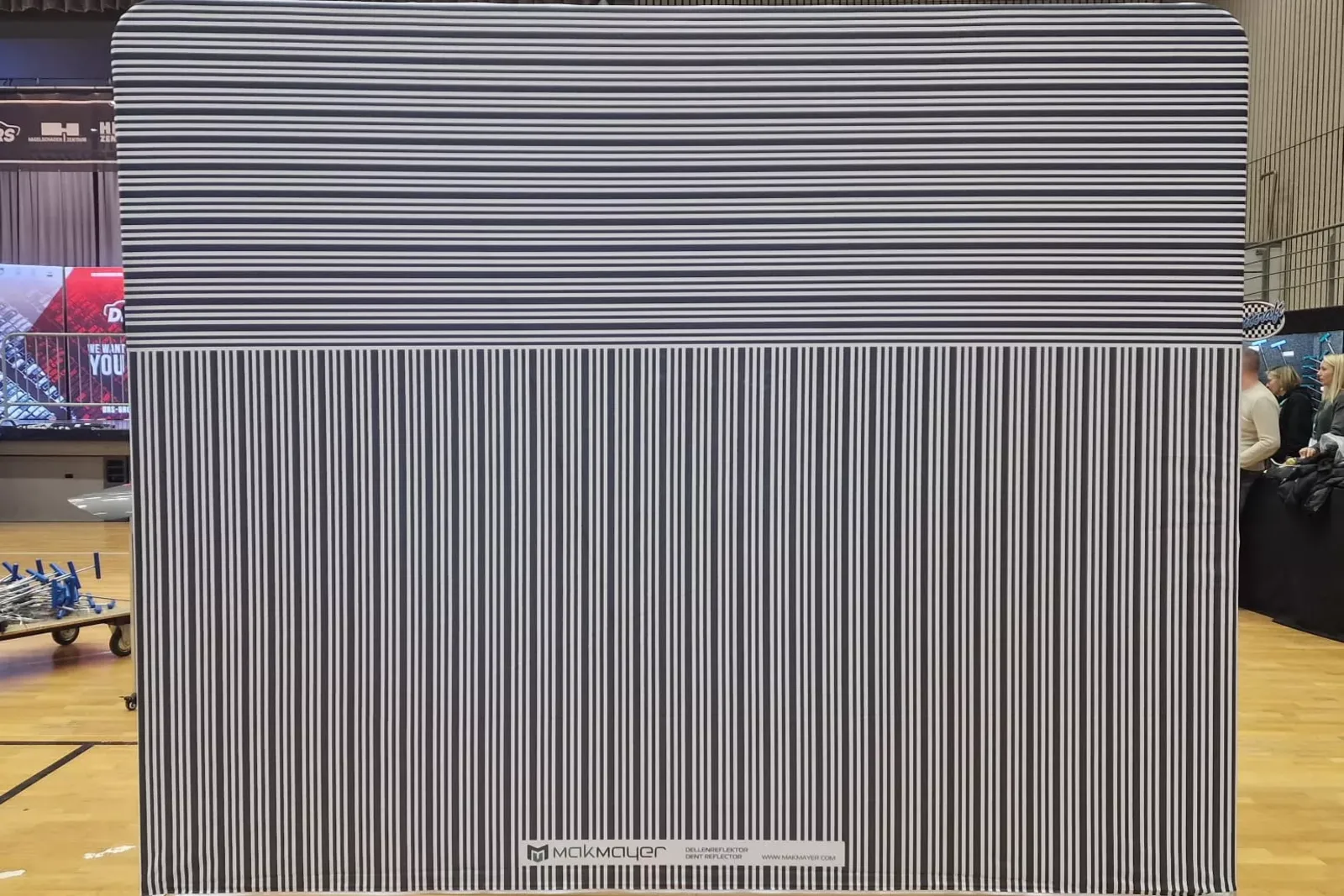
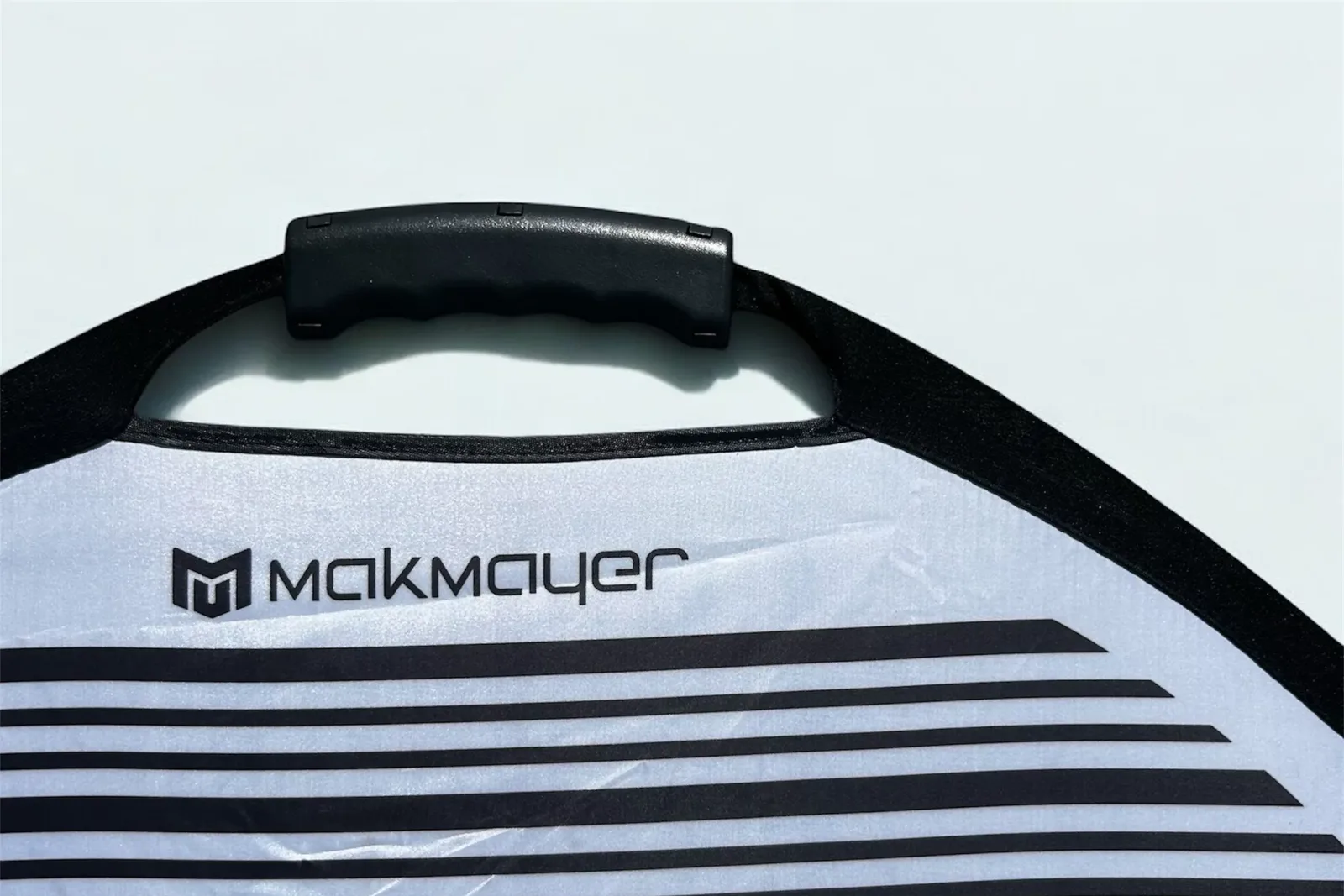
A PDR reflector is a round surface with black-and-white stripes whose lines are mirrored in the paint: where the body is deformed, the lines bend – making even small dents and hail damage visible. The reflector board works on the same principle but is a large surface that stands permanently in the workshop.
In short
- Round PDR reflector (also called dent reflector or line board): mobile, with handle.
- Reflector board: large surface (3 m wide, 2.5 m high) for the workshop.
- Where the mirrored lines bend, there is the dent.
- Reflector board approx. 2 m from the car, set up in about 5 minutes.
- Reflector and reflector board complement a PDR light, they do not replace it.
Round reflector or reflector board: the difference
| Feature | PDR reflector (round) | Reflector board |
|---|---|---|
| Shape | round, with handle | large surface on its own feet |
| Size | approx. 80 cm diameter | 3 m wide, 2.5 m high |
| Weight | 0.3 kg | 9 kg |
| Use | mobile: at the customer's site, on the road | stationary: in the workshop |
| Distance to the car | – | approx. 2 m |
| Setup | none, comes with a carrying bag | approx. 5 minutes, one person |
Both can be used together.
How to use it: making dents visible
Mirror the stripes. Position the reflector so that the stripes are mirrored in the damaged area.
Look along the lines. Where the lines bend or converge, there is the dent.
Check while repairing. Look again and again until the lines run straight.
The round reflector is used for damage assessment, quick visual checks, blending and final inspection – on parking dents as well as hail damage.
The reflector board in the workshop
The reflector board stands where many cars drive in and out – so dents are easier to see while working.
- Two stripe directions: horizontal on top, vertical below. The directions are matched so that dents on the respective car parts are most visible.
- Distance: approx. 2 m to the car.
- Inspection: often three reflector boards are set up, e.g. along the side walls, so you can see well from every side – then usually 2–3 m away.
- Setup: it stands on its own feet, all parts are included and numbered and simply plug together. Takes about 5 minutes, one person can do it.
Reflector or PDR light?
Both together: reflector and reflector board complement a PDR light, they do not replace it.
Make or print your own reflector board?
A DIY version does not pay off: the finished reflector board is already matched to the body panels – with horizontal stripes on top and vertical stripes below –, stands on its own feet and is set up in about 5 minutes.
Frequently asked questions
What is the difference between a PDR reflector and a reflector board?
The round PDR reflector is handy (approx. 80 cm, 0.3 kg) and meant for mobile jobs. The reflector board is a large surface (3 m wide, 2.5 m high, 9 kg) that stands in the workshop. Both can be used together.
What do I use a PDR reflector for?
For damage assessment, quick visual checks, blending and final inspection – on parking dents and hail damage.
How far from the car should the reflector board stand?
Approx. 2 metres. With several boards for inspections, usually three along the side walls, the distance is usually 2–3 metres.
How long does it take to set up the reflector board?
About 5 minutes, even alone. All parts are numbered and plug together; the board stands on its own feet.
Does a reflector board replace a PDR light?
No. Reflector and reflector board complement the light, they do not replace it.
Make dents visible
Round reflector for the road, reflector board for the workshop – or both together.